EPA Courses [page under construction]
Ins and Outs of Entrustable Professional Activities
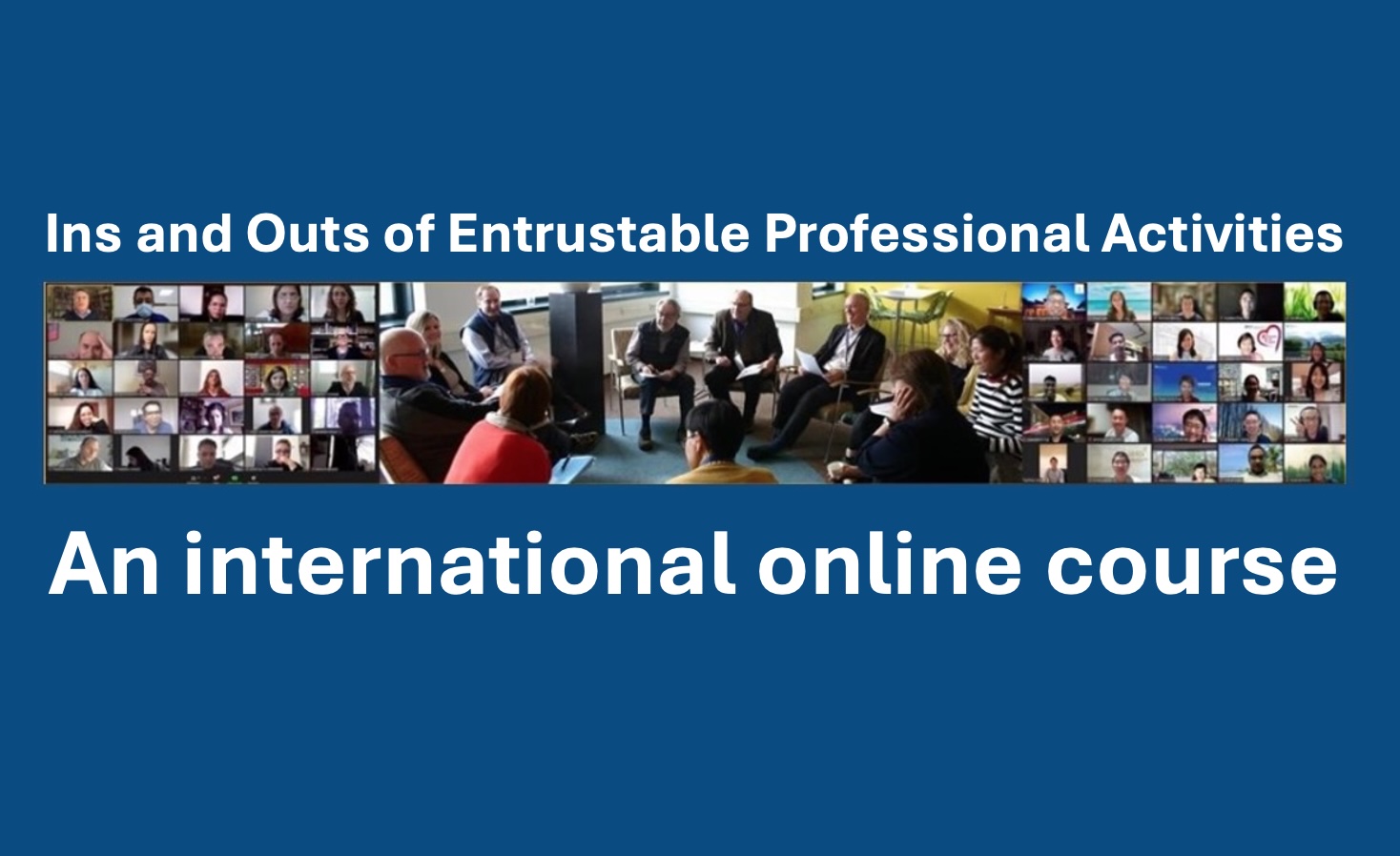
The Ins and Outs of Entrustable Professional Activities course is the HPE Entrust Foundation’s flagship faculty development program. It is designed for experienced educators, curriculum leaders, program directors and faculty developers who are involved in designing, implementing and evaluating competency-based health professions education.
History
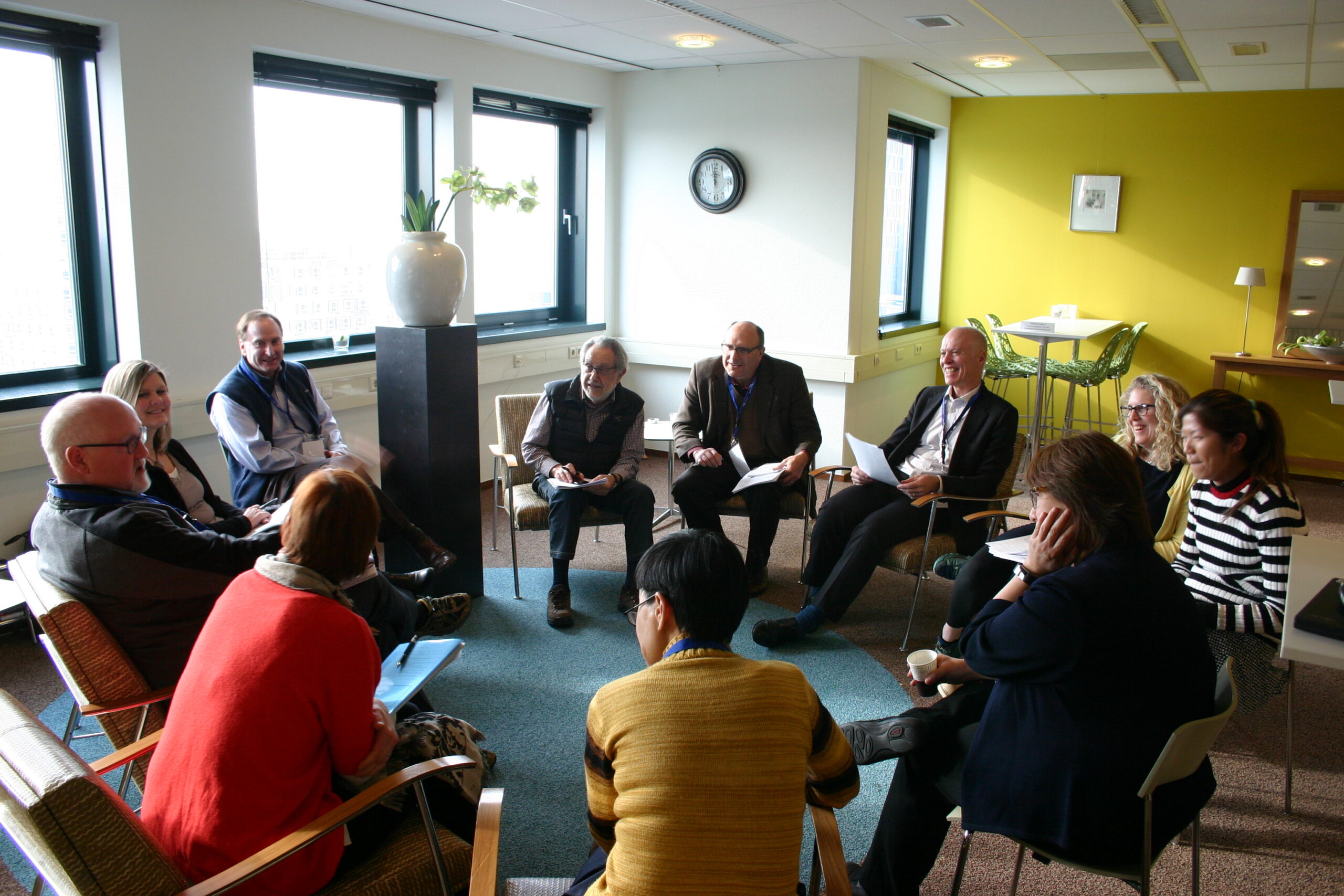
Since its launch in 2018, more than 700 educators from over 40 countries have participated in the programme. Since 2022, the international course has been offered online three to four times each year across different time zones. In addition, satellite courses have been developed in Spanish, Mandarin, German and Portuguese, as well as customized editions for specific communities, including for educators in Singapore and in dental education. While adapted to local contexts, all courses share the same educational philosophy and quality standards.
After years of service from UMC Utrecht and the Association for Medical Schools in Europe (AMSE), from 2027 onwards, the HPE Entrust Foundation has assumed responsibility for the coordination, further development and long-term sustainability of the international course program. The Foundation also provides support for the satellite EPA courses, ensuring that high-quality faculty development remains accessible to educators worldwide.
Nature of the course
Through a highly interactive, small scale online format, participants develop the knowledge and practical skills needed to translate the concepts of competency-based education and Entrustable Professional Activities into their own educational programs. The course combines educational theory, practical application, peer learning and discussion with recognized experts, drawn from international team of about 25+ course faculty. The courses consists of four 4-hour sessions across two weeks, prepared through literature readings and video clips.
The program is offered on a non-profit basis. Participation fees are intentionally kept affordable, with substantially reduced fees for participants from low- and middle-income countries (LMICs). Fees paid by participants from higher-income countries help make this accessible fee structure possible. After the course participants, as alumni keep access to the materials, can use these for local faculty development, and are regularly invited for open Q&A sessions with available course faculty.
A course director is responsible for the course and leads the course team. There is an overall program director, overseeing all courses. Finally there, is an EPA Courses Oversight Committee, consisting of highly experienced course faculty. Download a nice image of names and faces here.
Recent testimonials
… I highly recommend this course to all faculty members, medical educators, and graduate students; every second is worthwhile you’ve spent on it. … The strategies used to support understanding of the content during the synchronous sessions were very valuable and engaging. …The breakout activities, with their interactive and practical strategies, clarified key concepts in an engaging and even playful way. … I greatly appreciated the exchange with colleagues from diverse institutions and countries, all united by a shared commitment to advancing the quality of medical education. … I think without doubt I have come away feeling empowered, and I thank you all for this!
Practical maters
- Content and target group. The course covers principles of the use of EPAs and entrustment decisions making in 8 modules: general introduction, advanced concepts, curriculum development I and II, assessment I and II, faculty development, peer consultation about EPAs. The primary target group is faculty members and educational scholars involved in curriculum development with EPAs and scholarship
- Objectives. The course aims to give a good understanding what EPAs are and what their purpose is, as they are not simply or even primarily and assessment tool. Course participants should get a sense of elaborating EPA, curriculum development with EPAs, assessment focused on entrustment decisions for EPAs, and faculty development about EPAs and entrustment.
- Time investment. While the course takes four blocks of 4 hours, there is quite some preparatory work. It is not unreasonable to think of two full weeks of effort to get the most out of this course.
- Course faculty credentials. All course faculty facilitators are experienced educators who have done the course in the past, who are involved in curriculum development and who are scholarly active in this domain.
- The course includes. Fifteen brief videoclips and the powerpoint slides along with it; an elaborate Course Guide, intensive guidance in small breakout groups, access to the E-learning environment EPALE, to the EQual rubric tool, to downloadable breakout exercises and to an extensive EPA bibliography. All participants receive a certificate of attendance.
- The International course and satellite courses in different languages and target groups. The International EPA Course is most general and core version of the course. All other courses have basically the same structure but are delivered in a different language or with an adapted content to cater to a profession or specialty, also called satellite courses. The courses fees are generally similar. See below for detailed information.
The course fee is deliberately held low, and follows a four-tier system. In 2027, participants from affluent countries pay €500.-, those from upper-middle income countries €300.-, those from lower-middle income countries €150.- and those from low income or least developed countries € 50.-. The OECD website shows to which category a country belongs. Participants from AMSE member schools have a 10% discount in 2027 and 2028.
Course dates and times
| Dates | PST | EST | CEST | IST | SGT | ACDT | |
| Los Angeles | Boston | Paris | Delhi | Singapore | Adelaide | ||
| Course 1 | Feb 12*, 16, 19, 23 | 08:00 | 11:00 | 17:00 | 21:30 | 00:00 | 03:30 |
| Course 2 | June 11*, 15, 18, 22 | 02:00 | 23:00 | 08:00 | 11:30 | 14:00 | 15:30 |
| Course 3 | Nov 5*, 9, 12, 16 | 17:00 | 20:00 | 02:00 | 06:30 | 09:00 | 11:30 |
| All sessions are 4 hours, except the *first session, which starts one hour later and lasts 3 hours | |||||||
| Director | Other course faculty | |
| Course 1 | ||
| Course 2 | ||
| Course 3 |
The course group will be approximately 20 participants. The course is highly interactive and will be facilitated by 5 to 6 faculty members. For each course day, assignments will be given (literature, video clips, readiness assurance tests, specific exercise assignments), so do not underestimate the effort.
Register now for one the of the above courses. After registration, confirmation will be received with a link to payment. In case the course is full one can be placed on a waiting list is this has been indicated at registration.
Register
Portuguese-speaking countries represent a community of over 290 million people distributed across all continents, including nine countries plus the territory of Macau in China. For many educators, learners, and healthcare professionals residing in these countries, the language barrier presents a challenge to updating and aligning with new international benchmarks, such as the EPAs and the CBE. The Portuguese version of the International EPA course represents an opportunity for the development of these educators, catalyzing the paradigm shift from time-based training to CBE.
The first version of the course in Portuguese was launched in October 2026. The second, third, and fourth versions were released in March, April, and September 2026, respectively. In total, more than 70 educators have already been trained by the course, including participants from Brazil, Portugal, Cape Verde, Angola, and Mozambique.
The course aims to prepare participants for curriculum development, teaching and assessment with EPAs and to disseminate the implementation of EPAs in UME and PGME curricula, both in medicine and other health professions in Portuguese-speaking countries.
The course fee is deliberately held low, and follows a four-tier system. In 2027, participants from affluent countries pay €500.-, those from upper-middle income countries €300.-, those from lower-middle income countries €150.- and those from low income or least developed countries € 50.-. The OECD website shows to which category a country belongs. Participants from AMSE member schools have a 10% discount in 2027 and 2028.
| Course 1 March 1*, 4, 8, 11 | Course 2 September 13*, 16, 20, 23 |
|
|---|---|---|
| Brazil | 4 pm | 4 pm |
| Cape Verde | 6 pm | 6 pm |
| São Tomé and Príncipe | 7 pm | 7 pm |
| Guinea-Bissau | 7 pm | 7 pm |
| UK/Portugal | 7 pm | 8 pm |
| Netherlands | 8 pm | 9 pm |
| Angola | 8 pm | 8 pm |
| Equatorial Guinea | 8 pm | 8 pm |
| Mozambique | 9 pm | 9 am |
| Macau (China) | 3 am | 3 am |
| East Timor | 4 am | 4 am |
| All course sessions are 4 hours, except the *first session, which starts one hour later. The first hours of sessions II, III and IV are questions & answer (Q&A) discussions hours. | ||
The course group will be approximately 20 participants. The course is highly interactive and will be facilitated by 5 to 6 faculty members. For each course day, assignments will be given (literature, video clips, readiness assurance tests, specific exercise assignments), so do not underestimate the effort.
| Course Director | Pool of course faculty members | |
|---|---|---|
| Gustavo Salata Romão | Alexandre Sampaio Moura, SANTA CASA-BH - BRAZIL | Raquel Autran Coelho Peixoto, UFC/UNICHRISTUS- BRAZIL |
| [Olle ten Cate for Q&A hours] | Gustavo Salata Romão, UNAERP – BRAZIL | Rosa Malena Delbone de Faria, SANTA CASA-BH / UFMG – BRAZIL |
| Izabel Cristina Meister Martins Coelho, UFPR - BRAZIL | Susana Pereira Costa, UNIVERSIDADE DE ALGARVE - PORTUGAL | |
| Juliana Sá, UNIVERSIDADE DE AVEIRO – PORTUGAL | Mariana Xavier e Silva, HOSPITAL PEQUENO PRÍNCIPE– BRAZIL | |
| Marcus Vinicius Melo de Andrade, UFMG – BRAZIL | Ugo Caramori, UNICAMP – BRAZIL | |
Register now for one the of the above courses. After registration, confirmation will be received with a link to payment. In case the course is full one can be placed on a waiting list is this has been indicated at registration.
Register
…
…
…
The dental EPA courses are facilitated via the OSHU School of Dentistry in the USA